

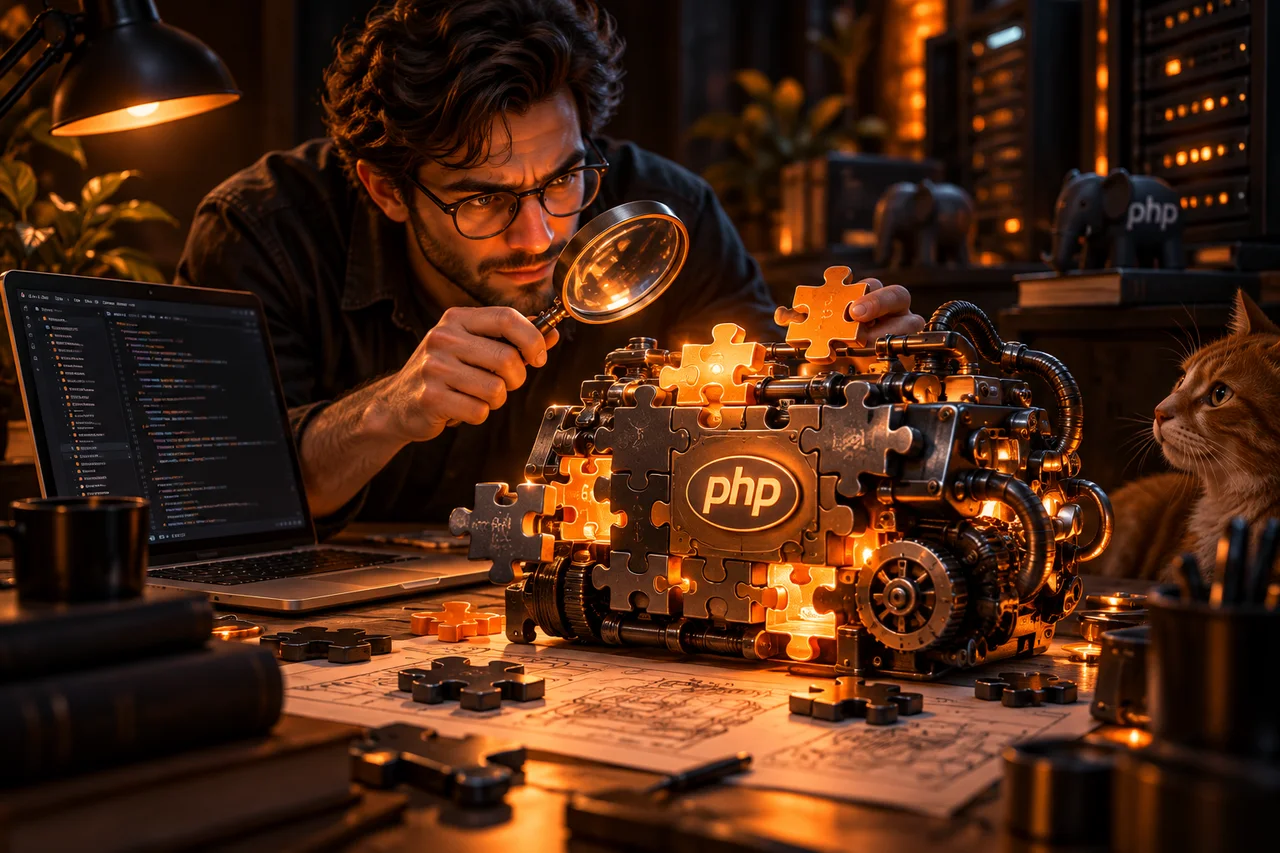
Everything you wanted to know about PHP (but were afraid to ask)
There are subjects that we don't dare discuss in society: taxes, socks with sandals... and PHP. However, this somewhat mysterious little acronym is all over the web, often in the shadows, like a code ninja.
So, if you've always wanted to understand what it is, what it's for, and why some developers love it so much while others avoid it... this article is for you.
PHP, what is this thing?
Smooth navigation (not a treasure hunt)
PHP, it is the abbreviation of “PHP: Hypertext Preprocessor”. Yes, it’s an abbreviation that contains… its own name. Inception atmosphere.
Concretely, it is a server-side programming language. It is used for generate dynamic web content. In other words, it’s what makes your site not look like a simple page WordArt from the 2000s.
What is PHP used for?
Overloaded site syndrome
Here are some concrete examples of what PHP can do:
- Manage contact forms (the one you fill out and never respond to, yes, that one)
- Display products on an e-commerce site
- Connect to a database (to display your blog posts or users)
- Manage member registration and login
- Create entire sites like… Facebook (yes, the beginnings), Wikipedia, or WordPress (which powers around 43% of the web, not bad for a “small” language)
The advantages of PHP (yes, it still has plenty)
1 It's everywhere
PHP is like parsley: it can be found in every corner. And even if some find it outdated, it continues to power millions of sites. Discreet but strong.
2 It’s open source (and free)
No monthly subscription, no surprise bills: PHP is open source and free. It’s the Netflix of the code… without the subscription.
3 It’s quick (when it’s cooked well)
PHP can be very efficient, especially in its recent versions (7 and 8). Well optimized, it can work miracles without sweating the CPU.
4 He is well surrounded
PHP works great with MySQL, Apache, and Linux. It’s a bit like the web server’s dream team.
The disadvantages of PHP (because no language is perfect, not even Latin)
1 He has a reputation as “old”
Like the Nokia 3310, PHP is reliable…but not very sexy. Trendy developers often prefer Node.js or Python. But hey, is sexy really a technical criterion?
2 Sometimes “dirty” code
PHP is so flexible that you can do anything... including horrors. A beginner developer can easily create a bug factory.
(Fortunately, with a little rigor and experience, everything is fine.)
3 Security: mandatory vigilance
PHP is not dangerous in itself, but used incorrectly, it can quickly become a hacker's swiss recipe. SQL injection, XSS vulnerabilities… does this mean something to you? No ? So much the better. Protect yourself and do business with professionals.
In summary (to shine in society)
PHP is…
- A server-side language
- Dynamic
- Open source
- Old but brave
- Powerful but sensitive
What it means to you
- He works in the shadows, like a good barista
- It changes the pages according to the visitors
- Free, with a huge community
- Still widely used despite criticism
- Well used = top. Misused = flop
The final word (I promise, no pun intended)
PHP is a bit like a Swiss army knife: it doesn't look like much, but it can do everything. And even if some developers shun it for more “trendy” languages, it remains a pillar of the web, reliable, robust, and always present behind the scenes of your favorite sites.
So the next time someone talks to you about PHP in a condescending manner, don't hesitate to remind them that it is probably still on a site WordPress.